


ESG software or extra-financial ERP: what does this difference really change
An ESG tool produces documents. An extra-financial ERP governs an asset. This is not a semantic nuance: it is a strategic decision that directly concerns managers as well as all those who manage the company.
Temps de lecture estimé : X min
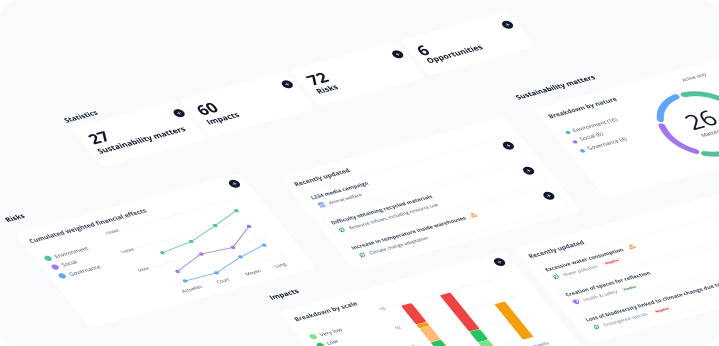


In our previous article, we detailed the 10 criteria for choosing an ESG software. The tenth - the fact that all the objects of the platform are interconnected, from collection to management - structures one of the fundamental differences between an ESG platform and an extra-financial ERP.
The purpose of this article is to go further: to understand what this difference is actually changing, and why this choice is not just a technical decision, but a strategic decision.
What an ESG reporting tool actually does
An ESG reporting tool produces documents. An extra-financial ERP governs an asset.
It is not a semantic nuance. This is a difference in strategic posture that directly concerns managers, COMEX or even CFOs.
Here is what most of the ESG tools on the market actually do: they centralize scattered data, format it according to a repository (CSRD, GRI, VSME...), and produce a report.
The deliverable is careful. The exercise is repeated every year. And the data, once the report is submitted, becomes inert again.
It's reporting. It is useful. It's not piloting.
What does an extra-financial ERP change
An extra-financial ERP works differently. Data is not collected there to produce a document. It is structured there to be used continuously.
It detects causalities between social indicators and operational performance. Risks are prioritized before they come up for advice. It measures the difference between the declared trajectory and the real trajectory.
It is the same distinction that exists between an accounting spreadsheet and a financial ERP. One documents. The other pilot.
However, Today, 60 to 70% of the value of a company is extra-financial : human capital, reputation, climate footprint, supplier relationships, governance. This stock is subject to increasing regulatory requirements, pressure from investors, and the vigilance of boards of directors.
It deserves the same infrastructure as financial data.
Harnest was designed for that.
Not to replace an ESG firm or automate an annual report, but to give senior management a system of governance for extra-financial data with the level of requirement of finance: traceability, auditability, proactive alerts, interoperability.
Reporting remains a deliverable. Piloting is a system.
Organizations that confuse the two don't fall behind on compliance.
They are lagging behind their own value.